

Finding a saddle to properly fit a draft or draft cross horse can be a challenge. Because there are many conformations in the various Draft breeds, a saddle that is specifically called a draft saddle is not a guarantee to fit all draft horses.
Here are some points to consider for draft saddles
Light weight saddles compared to a traditional western saddle. Placing a 40 lb saddle on an 18 hh horse is a challenge for most of us. This is when a lighter weight saddle comes in to play. Of course, even those 15 hh small drafts are a challenge to lift those saddles up over our shoulders. Add a shoulder or wrist injury and it becomes a real problem getting that saddle up and on.
Feeling secure in a saddle while riding a draft horse.
I hear this one often. The rider needs to feel secure in their seat. Draft horses can have large movements and therefore the rider should be in a saddle that will help them move with their horse. A saddle that doesn’t fit the rider will not help in gaining a sense of safety while riding.

1. Keep the Spinal Vertebrae Clear
Key point: The saddle should have a wide channel between the panels so that nothing presses directly on the vertebrae.
- Why it matters: Pressure on the vertebrae can cause discomfort, reduced mobility, and long‑term injury.
- What to aim for: The panels should rest on the large back muscles that flank the spine, allowing the vertebrae to move freely.
Consequently, a well‑designed channel protects the horse’s spine while providing a stable seat for the rider.
2. Remember That Not All Drafts Have Wide Withers
- Many draft horses display high, narrow, or medium‑width withers.
- Avoid assumptions: Until you have a precise wither tracing, don’t automatically select the widest gullet.
- Even among draft crosses, the wither width can vary considerably compared with purebred drafts.
Therefore, always measure each individual horse rather than relying on breed stereotypes.
3. Assess the Development of the Spinal Muscles
| Factor | Typical Effect on Back Shape |
|---|---|
| Genetics | Most drafts naturally have a broad back. |
| Muscle Tone | Poor tone can lead to a more protruding spine. |
| Fit of Existing Saddles | Ill‑fitting saddles may compress muscles and create gaps. |
| Nutrition | Inadequate feeding can limit muscle development. |
| Age | Older horses may lose muscle mass, exposing the spine. |
| Exercise | Lack of regular work reduces muscular support. |
- Result: A combination of these factors can produce a “protruding” spine, increasing the risk of pressure points.
Thus, evaluating muscle development is essential before choosing a saddle channel width.
4. Practical Steps for a Safe Fit
- Take a precise wither tracing (or use a digital scan) to determine the exact width needed.
- Select a saddle with an adjustable gullet that can be widened or narrowed as required.
- Check panel contact: The panels should sit on the musculature, leaving a clear channel over the vertebrae.
- Test the fit on a short ride, watching for any signs of discomfort or pressure marks.
- Re‑evaluate regularly: As the horse ages, gains/loses weight, or changes conditioning, the optimal channel width may shift.
5. Bottom Line
- Wide channel = protected spine.
- Measure each horse individually.
- Consider muscle tone, nutrition, age, and exercise when assessing back shape.
By following these guidelines, you’ll ensure that your draft horse rides comfortably and stays healthy for years to come


Fitting Australian Saddles to Draft Horses
1. Why the Snow River Australian Saddle Works Well
- Designed for a wide back: Its broader tree spreads the rider’s weight over a larger surface, which is ideal for draft horses that carry substantial mass.
- Accommodates medium‑to‑low withers: The saddle’s shape avoids excess pressure on the withers, making it comfortable for horses whose wither line isn’t particularly high.
Consequently, the Snow River provides a stable, balanced platform without compromising the horse’s natural conformation.
2. Key Construction Features
| Feature | Benefit for Drafts |
|---|---|
| Extended tree past the cantle | Gives extra support to the lumbar region and prevents the saddle from sliding forward on a deep back. |
| Fleece panels | Distribute the rider’s weight evenly across a larger area, reducing pressure points and enhancing comfort on a wide back. |
| Close‑contact design | Allows the saddle to sit snugly on the fleece panels, improving stability and rider feel without pinching the spine. |
3. How to Ensure a Perfect Fit
- Measure the wither width accurately (a simple tracing or digital scan works well).
- Check the gullet size: The Snow River’s adjustable gullet should be set wide enough to clear the spine while still providing adequate support on either side.
- Place a shim‑pocketed pad underneath if the horse’s back narrows slightly during the season; this lets you fine‑tune the fit without altering the saddle itself.
- Ride a short test loop and look for any red marks or soreness on the horse’s back—adjust the panels or shims as needed.
Therefore, a systematic fitting process ensures the saddle remains comfortable throughout long rides and training sessions.
4. Practical Tips for Long‑Term Use
- Inspect the fleece panels regularly; they can compress over time and may need replacement to maintain even weight distribution.
- Keep the tree clean and dry to prevent warping, especially after wet weather rides.
- Rotate shims or pads as the horse’s condition changes throughout the endurance season.
5. Bottom Line
The Snowy River Australian saddle, with its extended tree, fleece panels, and close‑contact design, is an excellent match for draft horses that have a wide back and medium‑to‑low withers. By measuring correctly, adjusting the gullet, and using shims when necessary, you can achieve a secure, comfortable fit that supports both horse and rider for long‑distance events.
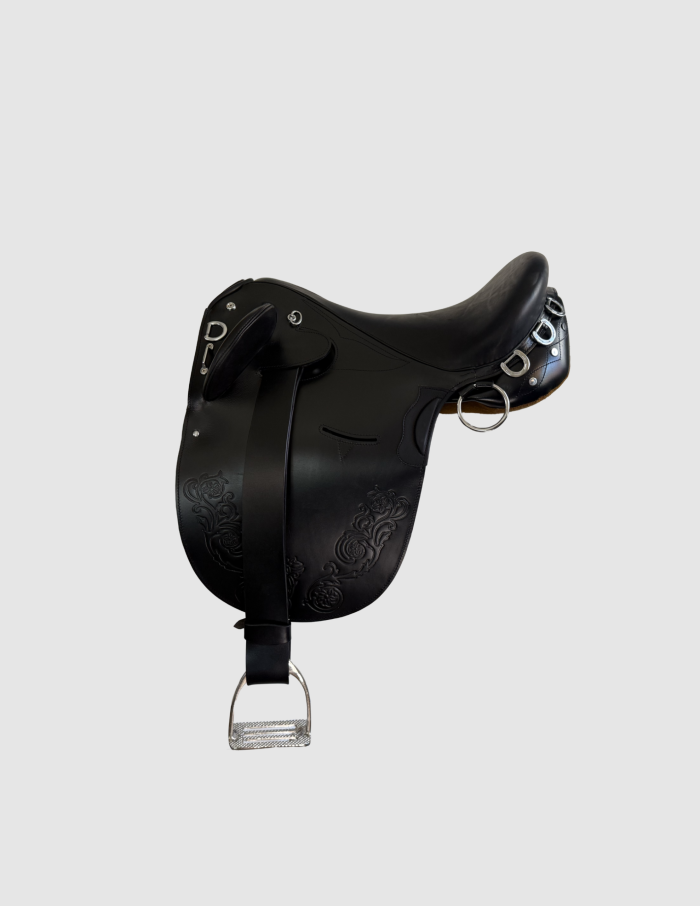
The Campdrafter: A Great Fit for Draft Horses with Medium‑to‑Wide Withers and a Flatter Back
1. Why the Campdrafter Works Well for Drafts
- Appropriate wither width – Designed for horses that have medium to wide withers, so the gullet clears the spine without creating gaps.
- Flatter back compatibility – The saddle’s shape accommodates a flatter back profile, preventing excessive pressure on the vertebrae.
Consequently, the Campdrafter offers a balanced seat that respects the horse’s natural conformation.
2. Panel Options and Their Benefits
| Panel Type | Characteristics | Advantages for Drafts |
|---|---|---|
| Serge panel | Thin, breathable, can be aerated by the rider | Keeps the rider close to the horse while still providing cushioning; easy to maintain. |
| Stuffed‑wool panel | Slightly thicker than serge but lighter than traditional flocking | Offers a soft feel without adding bulk, allowing the saddle to sit low on the back. |
- Both panels gradually conform to the horse’s back, creating a custom fit that becomes more comfortable over time.
3. Weight Considerations
- The Campdrafter weighs approximately 21 lb (depending on seat size).
- This relatively low weight makes it much easier to lift onto a full‑size draft horse, reducing strain on the rider and crew during saddle changes.
Therefore, the lighter construction contributes to overall maneuverability and convenience on the trail or at the stable.
4. Practical Tips for Getting the Best Fit
- Measure the wither width precisely before selecting the gullet size.
- Choose the appropriate panel (serge or stuffed wool) based on how close you want the rider to sit to the horse and your preference for maintenance.
- Test the saddle on a short ride and check for any pressure points; adjust shims or pads as needed.
- Re‑evaluate after a few weeks – the panel will continue to conform, and minor tweaks may improve comfort further.
5. Bottom Line
The Campdrafter’s thin serge or stuffed‑wool panels, moderate weight, and design for medium‑to‑wide withers make it an excellent choice for draft horses with flatter backs. It keeps the rider close enough for effective use of leg aids, while still delivering ample cushioning for the horse’s comfort.
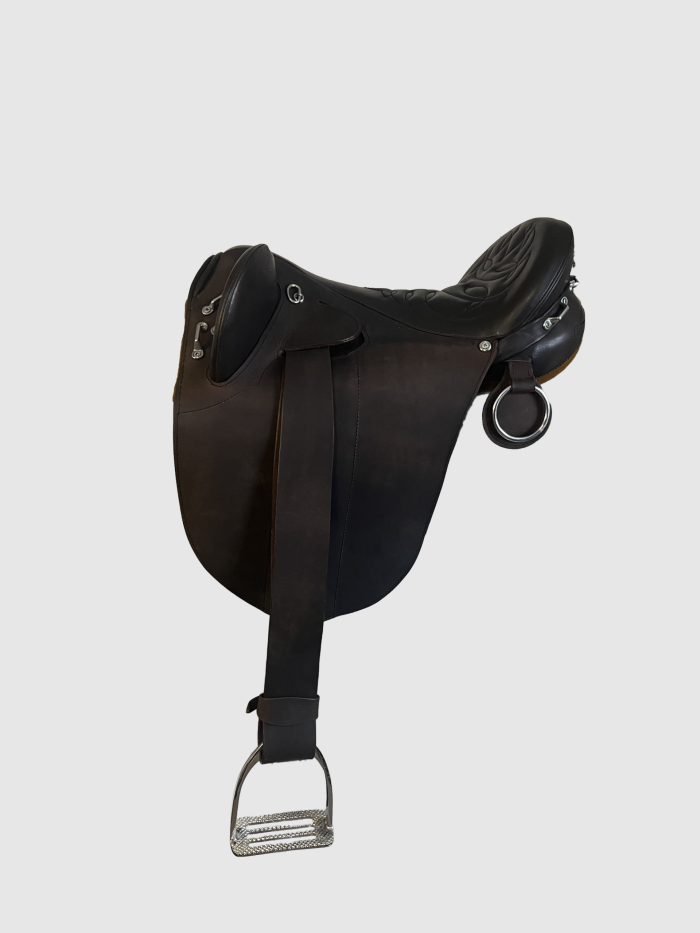
Aussie Endurance & Lite Rider Saddles – Light‑Weight Options for Draft Horses
1. What Makes These Saddles Stand Out
- Lightest in the lineup – Both models weigh ≈ 16 lb, which is significantly lighter than most endurance saddles.
- Wide channel between panels – Provides a clear passage for the spinal vertebrae, eliminating pressure on the horse’s back.
- Short overall length – Keeps the rider’s weight centered and reduces the chance of the saddle slipping forward on a deep‑backed draft.
- Foam panels – Lightweight yet supportive; they conform to the horse’s back over time for a comfortable, custom fit.
Consequently, the combination of low weight and a generous channel makes these saddles especially suitable for draft horses that need minimal interference with their spine.
2. Ideal Horse Conformation
| Conformation | Why It Fits |
|---|---|
| Straight spine | The flat tree and short length work best when the horse’s back is relatively linear, allowing the saddle to sit evenly without needing extra “rock” to accommodate curvature. |
| Medium‑to‑wide withers | The wide channel clears the vertebrae while the overall width of the tree distributes weight across the broad back of a draft. |
Therefore, if your draft horse has a straight, less‑curved back, the Aussie Endurance or Lite Rider will provide a secure, comfortable fit.
3. When to Choose a Different Model
- Curved or heavily arched backs – Horses with pronounced spinal curvature benefit from a saddle with more “rock” in the tree to follow the natural curve. In those cases, a model with a deeper channel and a slightly longer tree may be preferable.
4. Bottom Line
The Aussie Endurance and Lite Rider models are the lightest saddles in the Aussie range (≈ 16 lb) and excel on draft horses with a straight spine, medium‑to‑wide withers, and a need for a wide channel. Their short length and foam panels keep the rider close while protecting the horse’s back, making them an excellent choice for endurance events where weight and comfort are paramount.

1. When a Thicker, Stuffed Panel Is Needed – The Brumby
- Ideal for a curved back – Drafts with a pronounced arch benefit from a thicker stuffed‑wool panel, which fills the space and supports the spine.
- Deep seat – Provides extra security for the rider, especially on long rides or rough terrain.
- Narrow thigh twist – Does not spread the pelvis, enhancing stability without restricting movement.
Consequently, the Brumby delivers a comfortable, secure fit for drafts that require additional cushioning and a deeper seat.